
COLLECTIONS
INTRODUCTION
For nearly two centuries, the Institute Library has built and sustained a collection that reflects its mission as one of America’s oldest independent membership libraries. More than a repository of books, the collection documents changing ideas in literature, history, philosophy, science, the arts, and civic life while continuing to support reading, scholarship, and public conversation.
The Library’s holdings are distinguished not only by their breadth but also by the way they are organized. Rather than adopting the Dewey Decimal or Library of Congress systems, the Institute Library continues to use the historic Borden Classification System, developed specifically for the Library during the nineteenth century. This distinctive approach preserves the intellectual character of the collection and offers visitors a unique way to discover relationships among subjects.
Today the collection continues to grow through thoughtful acquisitions, careful stewardship, and long-term preservation. Collection development policies guide these efforts, ensuring that new materials strengthen the Library’s mission while preserving the historic character and integrity of its holdings.
Origins
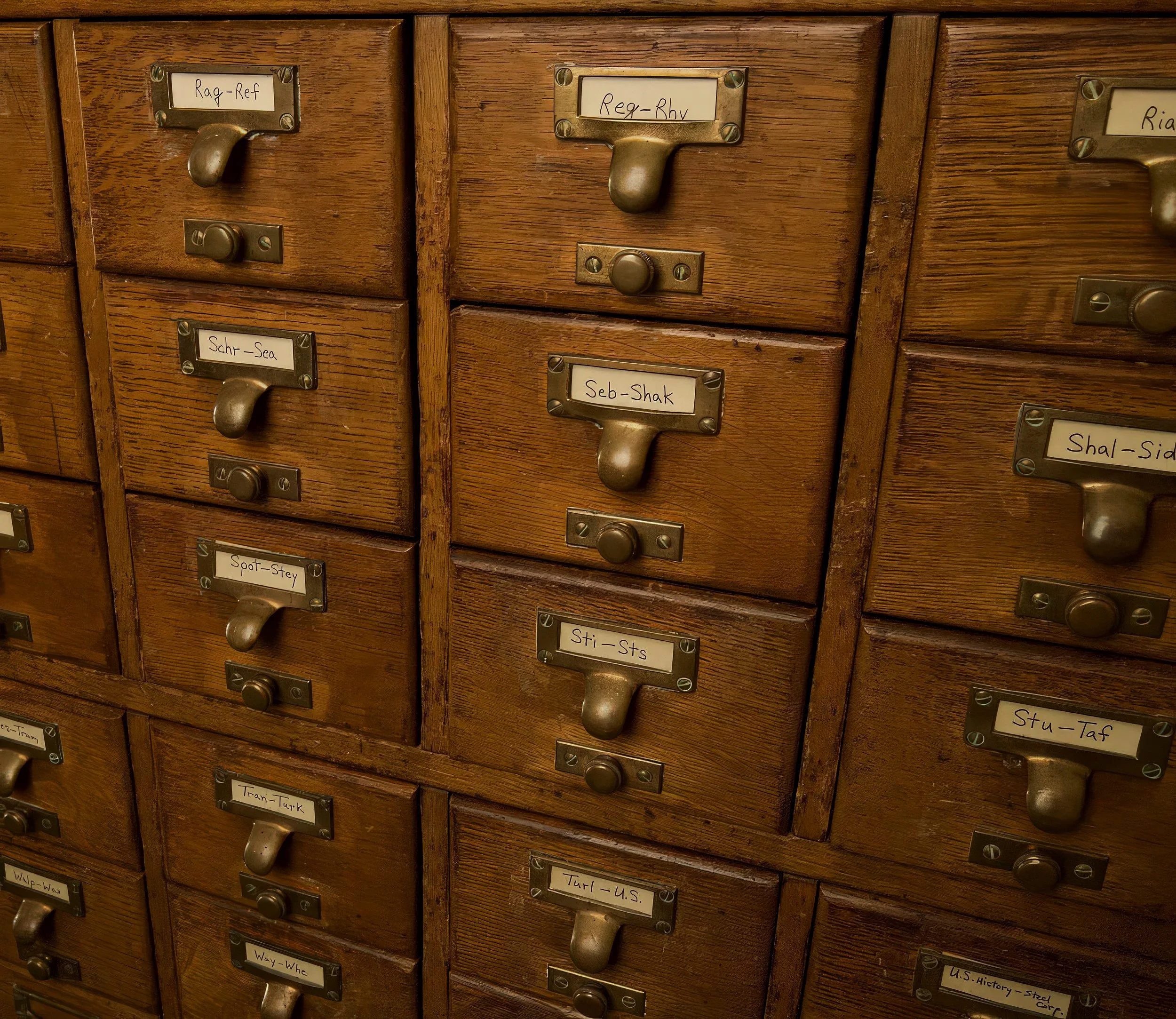
The Institute Library’s classification system was created by William Alanson Borden, who served as librarian from 1897 and again from 1903 to 1910. Following the establishment of the New Haven Free Public Library in 1887, The Institute Library shifted its focus to building and circulating a distinguished collection of general-interest literature. Borden used the Library as a laboratory for new ideas in librarianship, developing a classification system that remains in use today alongside his original handwritten card catalog and shelf lists.
The Borden Classification System divides knowledge into twenty-six lettered classes with numbered subdivisions, similar in concept to the Library of Congress system developed during the same period. Designed to expand as knowledge evolves, it reflects the Institute Library’s mission of “mutual encouragement in the pursuit of useful knowledge.”
In 1910, Borden accepted an invitation from Maharaja Sayajirao Gaekwad III of Baroda to establish a free public library system in India. Although his classification system was adopted there for a time, today it survives in continuous use only at the Institute Library. Ours remains a living collection, continually enriched through new acquisitions and donations that reflect the interests of our members. Among our archives are Borden’s original manuscripts describing his classification system and related research.
Organization & CARE
Unlike most libraries, the Library continues to organize its holdings using the historic Borden Classification System, developed specifically for the Library during the nineteenth century.. Rather than assigning books numerical call numbers, the system groups subjects according to an intellectual framework that encourages exploration and reflects the Library’s long tradition of interdisciplinary inquiry. It remains an important part of the Library’s identity and continues to guide the organization of the circulating collection.
The collection is strengthened through a thoughtful program of acquisition, preservation, and responsible stewardship. Materials are selected for their literary, historical, cultural, and scholarly value, while gifts are considered in light of the Library’s mission, collecting priorities, and available resources. Ongoing conservation and collection management ensure that both historic and contemporary works remain accessible to current members while preserving the collection for future generations.
The Collection
The Institute Library’s collection encompasses literature, history, philosophy, science, the arts, and the humanities, reflecting generations of readers, scholars, and members who have shaped its character. While contemporary works continue to be added, the collection also preserves many nineteenth- and early twentieth-century editions that remain central to the Library’s identity.
As a circulating membership library, the collection is intended to be used. Members may browse the stacks, borrow materials, and discover books through both traditional subject organization and the unique Borden Classification System. Alongside its circulating holdings, the Library maintains reference works, periodicals, and special collections that document the institution’s history and the cultural life of New Haven.
Together, these holdings reflect nearly two centuries of intellectual curiosity and continue to serve readers, researchers, and the broader New Haven community.
Collection Development Policy
The Institute Library’s collection has long focused on literary fiction, mystery and suspense, narrative nonfiction, and reference materials relating to librarianship, New Haven, and Connecticut. Highly specialized scholarly works intended primarily for academic audiences are generally outside the scope of the collection.
The Library is currently conducting a comprehensive assessment of its holdings, including books, periodicals, archival records, and ephemera. Until this work is substantially complete, the accessioning of new materials has been paused to better understand the collection, identify priorities, and guide future acquisitions.
Future collecting decisions will be made by the Book Committee and approved by the Board of Directors. If you believe you have materials that may be appropriate for the collection, please submit a bibliography or brief description for future consideration to: eva@institutelibrary.org.
EXPLORE online
Search the catalog online through LibraryThing to browse holdings by title, author, subject, or Borden Classification. The catalog provides an easy way to discover the breadth of the Library’s collections while reflecting the organization of its historic shelves when visiting or exploring at home,
Collection development, preservation, and the acceptance of gifts are guided by policies that ensure the Library’s holdings remain vibrant, accessible, and relevant for future generations.
LIBRARYTHING:
https://www.librarything.com/catalog/TheInstituteLibrary
MORE ON CLASSIFICATION AND RECORDS:
The Abbreviated Borden Classification System
The Expanded Borden Classification System